We are happy to announce a new blog series created in collaboration between the Sarcoma Patient Advocacy Global Network (SPAGN) and the STREXIT 2 Project. In 2026, the series will explore key topics in clinical research, including international collaboration in rare cancer research, the role of Horizon Europe in driving innovation, the integration of real-world data in cancer trials, and how pragmatic trial designs can bring clinical research closer to patients.
The first blog is about international collaboration in rare cancer treatment.
Why International Collaboration Is Essential to Advancing Rare Cancer Treatment?
Sarcomas account for just about 1% of all cancers, yet they comprise more than 100 different subtypes. Sarcoma is not one disease; it is a family of rare and complex malignancies that can arise almost anywhere in the body. That rarity is a significant challenge.
When patient numbers are small, expertise is often dispersed and evidence accumulates slowly. In many cases, a single national healthcare system cannot generate sufficient data on its own. One of the most effective ways to advance treatment, therefore, is to develop collaborations that extend beyond borders.
Evidence generation without borders: The example of STREXIT2
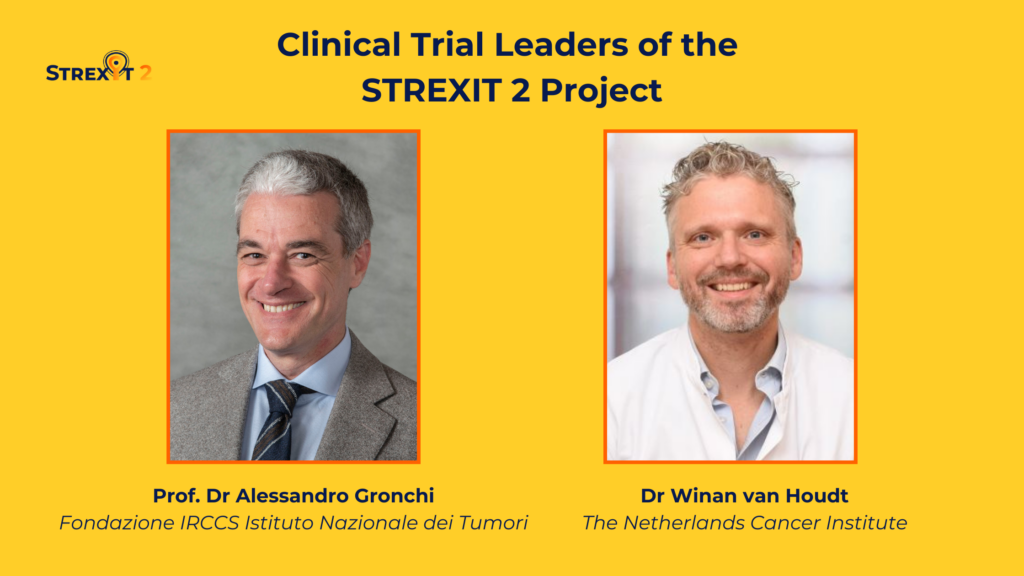
Dr Alessandro Gronchi and Dr Winan van Houdt are leading the STREXIT2 study, an innovative study, designed in parallel with the STRASS2 international trial. Both STREXIT2 and STRASS2 embody this collaborative model, and they reflect an emerging transformation in oncology research.
Traditional clinical trials are an essential source of evidence generation, but they often exclude patients or fail to capture real-world complexity — a limitation that is particularly challenging in rare cancers. STRASS2 is a randomised controlled trial with a pragmatic comparator. By integrating a parallel observational component, STREXIT2 allows more patients to contribute data, captures real-world outcomes, and better reflects the heterogeneity that defines sarcoma. This approach makes evidence generation more inclusive, more representative and allows valuable conclusions to be made much quicker.
In a rare cancer setting, such innovation would not be possible without coordinated international networks capable of enrolling sufficient numbers of patients across countries. At the same time, this model advances oncology more broadly, because capturing real-world outcomes alongside randomized data strengthens clinical research for all cancer types. Dr Gronchi believes that next-generation studies are likely to include parallel observational components, marking an important step forward for oncology as a whole.
Policy enabling science
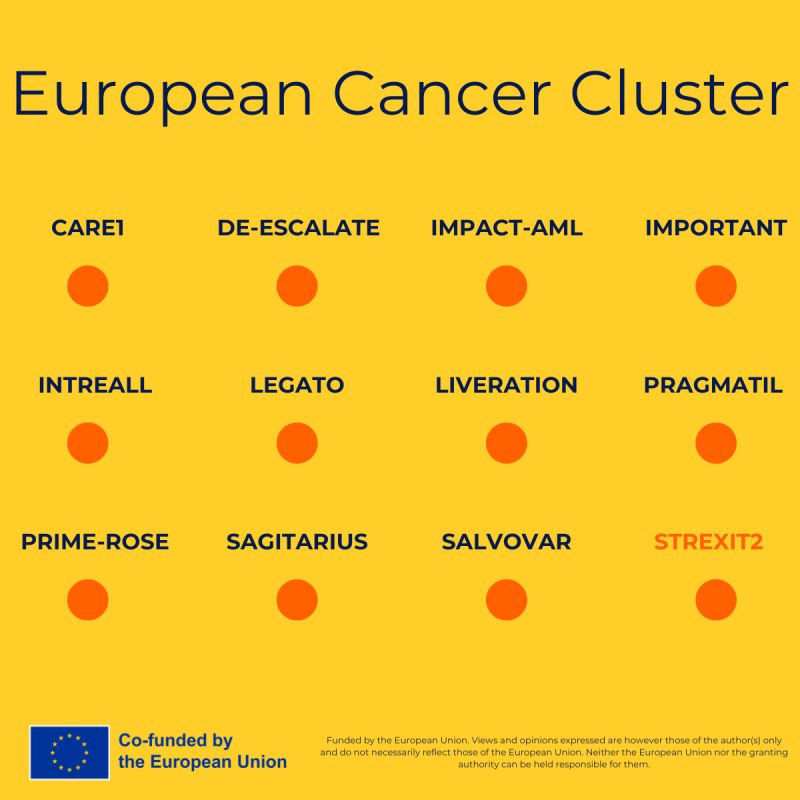
STREXIT2 operates within the framework of the Horizon Europe Cancer Mission, an initiative of the European Commission aiming to improve the lives of more than three million people by 2030.
The Cancer Mission recognizes that rare cancers require coordinated ecosystems. By supporting cross-border collaboration, harmonized data infrastructures, and research integration, it creates the conditions in which rare cancer trials have a far greater chance of success.
Patients as the Core of Clinical Progress
Patients are the most important partners in any collaboration aimed at advancing treatment.
The Sarcoma Patient Advocacy Global Network has demonstrated that collaboration in rare cancers extends beyond traditional institutions. Through a global Priority Setting Partnership, 600+ patients and carers helped define the research agenda for sarcoma. Across both clinical and advocacy perspectives a recurring theme is the need for international registries and common data models. International registries are cross-border data platforms that systematically collect clinical, pathological, and molecular information on patients with rare cancers such as sarcomas. Because patient numbers are small within individual countries, shared registries make it possible to build sufficiently large datasets to generate robust evidence and support clinical trial development. By harmonizing data standards and enabling secure data sharing, they turn fragmented national experience into a coordinated global knowledge base.
If implemented widely, such registries could significantly strengthen international collaboration. Patients contribute not only their data but also their active engagement in shaping research priorities. In rare cancers, every shared data point matters.
International registries make it possible to build larger datasets for robust analysis, validate prognostic tools more efficiently, identify molecular subgroups with greater precision, and assess trial feasibility more effectively. When genomic services, clinical data, and patient-reported outcomes are integrated across networks, the impact multiplies. Data generously given by patients ceases to be local and becomes part of a global medical infrastructure.
The most powerful dimension of international collaboration in rare cancer research is not technological but human. It is reflected in patients advocating for access to tumor DNA analysis, clinicians consulting across time zones, researchers sharing protocols rather than competing for them, and policy-makers aligning regulatory frameworks to reduce barriers. Collaboration in rare cancers is driven by shared urgency and shared responsibility.
From specialist centers to intelligent networks
A key evolution in sarcoma care is the move from isolated specialist centers to structured, multidisciplinary networks. The concept of a Sarcoma Intelligent Specialist Network reframes rare cancer care as a coordinated ecosystem rather than a single location.
At the core of this model is a simple but essential principle: every patient should be managed by a multidisciplinary team that meets formally to reach consensus decisions. This reflects a fundamental reality of rare disease care – expertise is often distributed but technology allows that expertise to travel.
Digital pathology, virtual tumor boards, shared imaging platforms, and cross-border consultations enable clinicians to pool knowledge internationally. Reference networks make highly specialized input available even when it is not locally present. In rare cancers, intelligence must be collective.
The future of rare cancer research should not be defined by individual institutions alone, but by the strength of the networks that connect them.