
Traditional clinical trials are essential for determining whether new treatments are safe and effective. However, the highly controlled conditions that make these trials rigorous can also make participation difficult. Strict eligibility criteria, frequent hospital visits, additional tests and, often, the need to travel to specialist centres may prevent many patients from taking part. (Adashek and Kurzrock, 2023)
These barriers are particularly significant for people living with rare diseases and rare cancers such as sarcomas. Patients are geographically dispersed, specialist expertise is concentrated in relatively few centres, and small patient populations make recruitment challenging. (Baffour et al., 2026)
Pragmatic trials complement rather than replace conventional clinical trials. Traditional designs remain essential in phase I and many phase II studies, where researchers must establish safety, determine dosage and assess preliminary activity under carefully controlled conditions. Pragmatic approaches are generally most suitable for phase III and phase IV research, once sufficient evidence about safety exists and the focus shifts towards comparative effectiveness, treatment optimisation and outcomes in routine clinical practice. (Cardoso Borges et al., 2025)
By studying treatments under conditions that more closely resemble routine healthcare, pragmatic clinical trials can make research more inclusive, generate evidence that is directly relevant to clinical practice and make participation easier for patients. (Cardoso Borges et al., 2025)
What makes a clinical trial pragmatic?
Traditional explanatory trials generally ask whether an intervention can work under carefully controlled conditions. Pragmatic trials focus on a related but different question: how well does the intervention work in routine clinical practice?
Rather than following a single fixed model, pragmatic trials can incorporate several design features (Cardoso Borges et al., 2025; Shortreed et al., 2019):
- broader eligibility criteria that reflect the diversity of patients seen in routine care;
- treatment delivered through standard healthcare pathways;
- participation by regional and community hospitals as well as major academic centres;
- simplified data collection focused on outcomes that matter to patients and clinicians;
- information from registries, electronic health records and other real-world sources; and
- flexible or decentralised follow-up, where clinically appropriate.
These features can reduce the distance between research and care. They may also help address the “efficacy–effectiveness gap”: the difference between how a treatment performs in a conventional trial and how it performs in the more complex reality of everyday healthcare. (Cardoso Borges et al., 2025)
The European Organisation for Research and Treatment of Cancer (EORTC) has identified pragmatic trials as an important way to answer routine clinical questions using medically relevant outcomes and more representative patient populations. (EORTC, 2025)
STREXIT2: extending participation in sarcoma research
STREXIT2 provides an important example of how pragmatic thinking can strengthen research in a rare cancer.
Retroperitoneal sarcomas are uncommon tumours that develop in the space behind the abdominal cavity. Surgery is the principal treatment, but an important question remains: can chemotherapy given before surgery improve outcomes for patients with high-risk disease? (ClinicalTrials.gov, NCT04031677)
The international phase III STRASS2 trial led by EORTC is addressing this question by comparing neoadjuvant chemotherapy followed by surgery with surgery alone. However, as in any randomised trial, not every patient treated at a participating centre will enter the study. (ClinicalTrials.gov, NCT04031677)
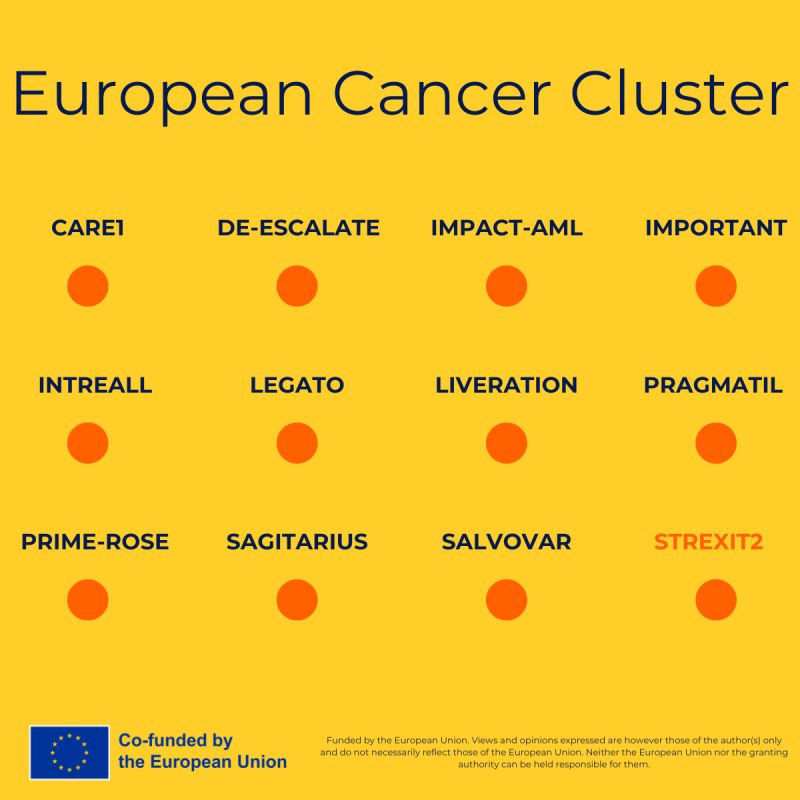
The Horizon Europe-funded STREXIT2 project complements STRASS2 with a parallel observational component that collects real-world data from patients who do not participate in the randomised trial. Researchers will be able to compare outcomes and investigate whether carefully matched observational data can be combined with the randomised evidence. (STREXIT2 Consortium, 2025; European Commission, 2026)
This approach allows more patients to contribute to research while continuing to receive care through the most appropriate clinical pathway. It can also help researchers understand whether the findings of the randomised trial apply to the broader and more heterogeneous population encountered in clinical practice. (STREXIT2 Consortium, 2025)
For rare cancers, this is especially valuable. When every eligible patient represents an important part of the available evidence, data from people outside a conventional trial should not automatically be lost.
Patients as partners in pragmatic research
A trial is not genuinely closer to patients simply because it involves fewer visits or collects data electronically. The research question, outcomes and participation pathway must also reflect patients’ priorities. (Furlong et al., 2024)
Patients and advocacy organisations can help researchers determine which treatment comparisons matter most, what level of travel or monitoring is realistic, and which outcomes should be measured. These may include quality of life, symptoms, treatment burden, the ability to work or study, time spent away from home and the impact of care on families. (Furlong et al., 2024)
This is particularly important in rare diseases. A design that appears convenient from an institutional perspective may still create substantial barriers for someone who must arrange visits with specialists or travel several hours to reach an expert centre. (Baffour et al., 2026; Furlong et al., 2024)
Pragmatic research should therefore be designed with patients, not merely around the data available about them. (Furlong et al., 2024)
Building a European ecosystem for patient-centred trials
Europe already has many of the foundations needed to expand pragmatic research: international clinical networks, disease registries, patient organisations and the European Reference Networks, which connect specialist centres working on rare and complex conditions. (European Commission, n.d.)
The challenge is to make these elements work together. Common data standards, interoperable registries, proportionate regulation and sustainable research infrastructures could allow routine care and clinical research to support one another more effectively. (Shortreed et al., 2019; European Commission, n.d.)
Pragmatic trials will not replace conventional randomised studies, nor should they. Instead, they can complement them by including broader patient populations, testing interventions in everyday practice and extending evidence generation beyond the boundaries of a traditional trial. (Cardoso Borges et al., 2025)
For patients with sarcoma and other rare diseases, this development is especially important. Research becomes more effective when it reaches people where they receive care, recognises the complex logistics of their treatment, and enables more patients to contribute to the evidence.
Bringing trials closer to patients is a way to make clinical research more representative, more relevant and, as a result, more capable of improving care.
References
- Adashek, J. J., & Kurzrock, R. (2023). Home-run trials for rare cancers: giving the right drug(s) to the right patients at the right time and in the right place. npj Precision Oncology, 7, 129.
https://doi.org/10.1038/s41698-023-00487-5 - Baffour, S., Löwe, B., Braun, A., & Uhlenbusch, N. (2026). Optimizing recruitment in rare disease research: a cross-sectional online study evaluating sampling strategies for hard-to-reach populations. Orphanet Journal of Rare Diseases, 21, 29.
https://doi.org/10.1186/s13023-025-04192-3 - Cardoso Borges, F., van der Graaf, W. T. A., Saesen, R., et al. (2025). Defining the role of pragmatic clinical trials in cancer clinical research: outcomes of a collaborative workshop hosted by the European Organisation for Research and Treatment of Cancer. The Lancet Oncology, 26(5), e253–e263.
https://doi.org/10.1016/S1470-2045(24)00756-3 - Shortreed, S. M., Rutter, C. M., Cook, A. J., & Simon, G. E. (2019). Improving pragmatic clinical trial design by using real-world data. Clinical Trials, 16(3), 273–282.
https://doi.org/10.1177/1740774519833679 - European Organisation for Research and Treatment of Cancer (EORTC). (2025). Defining the role of pragmatic clinical trials.
https://www.eortc.org/blog/2025/05/05/pragmatic-clinical-trials-workshop/ - ClinicalTrials.gov. Surgery with or without neoadjuvant chemotherapy in high-risk retroperitoneal sarcoma (STRASS2) (NCT04031677).
https://clinicaltrials.gov/study/NCT04031677 - STREXIT2 Consortium. (2025). STREXIT2: A pragmatic clinical study of neoadjuvant chemotherapy followed by surgery versus surgery alone.
https://strexit-horizon.eu/about/ - European Commission. (2026). STREXIT2 (Project 101103843). CORDIS: EU Research Results.
https://cordis.europa.eu/project/id/101103843 - Furlong, P., Dugar, A., & White, M. (2024). Patient engagement in clinical trial design for rare neuromuscular disorders: impact on the DELIVER and ACHIEVE clinical trials. Research Involvement and Engagement, 10, 1.
https://doi.org/10.1186/s40900-023-00535-1 - European Commission. (n.d.). European Reference Networks.
https://health.ec.europa.eu/rare-diseases-and-european-reference-networks/european-reference-networks_en